Microservices and its Architecture pattern-short note
Image
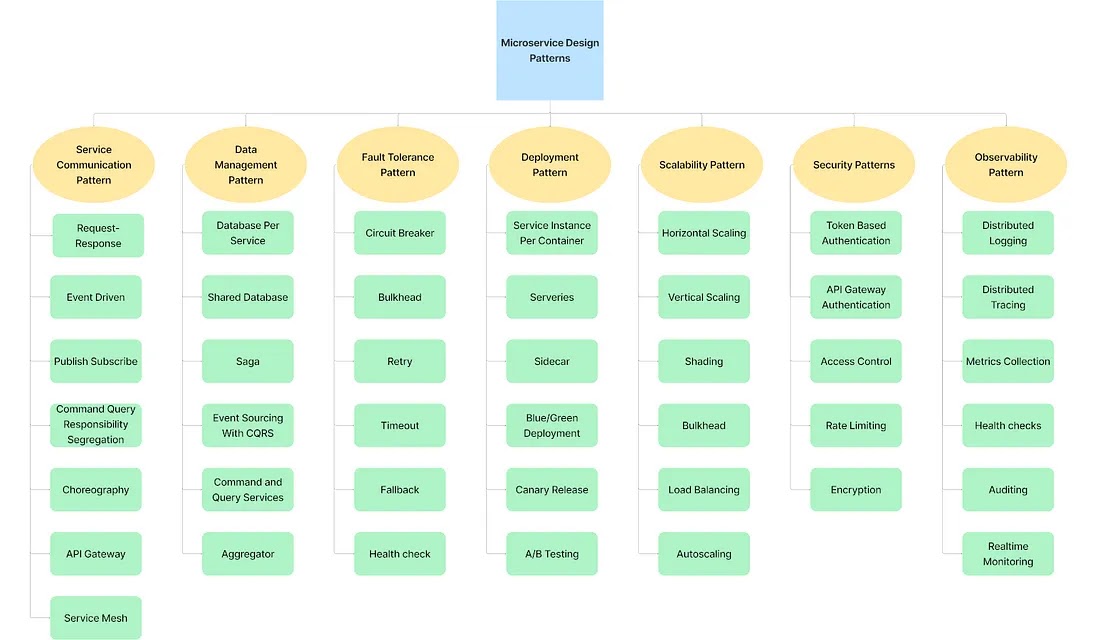
🟢 Microservices architecture is a software design approach where an application is composed of small, independent services that are focused on specific business capabilities. Each service is responsible for a single task or functionality and communicates with other services through well-defined APIs (Application Programming Interfaces). This architecture pattern aims to break down complex applications into smaller, more manageable components that can be developed, deployed, and scaled independently. Design patterns play a crucial role in microservices architecture as they provide reusable solutions to common design problems. Here are some design patterns commonly used in microservices architecture: 🟢 Service Communication: 🔸Microservices communicate with each other using lightweight protocols like HTTP or messaging queues. Design patterns like the API Gateway pattern can be used to provide a single entry point for clients to interact w...
Important Architecture Styles & patterns of Software Design in Microservices

Image
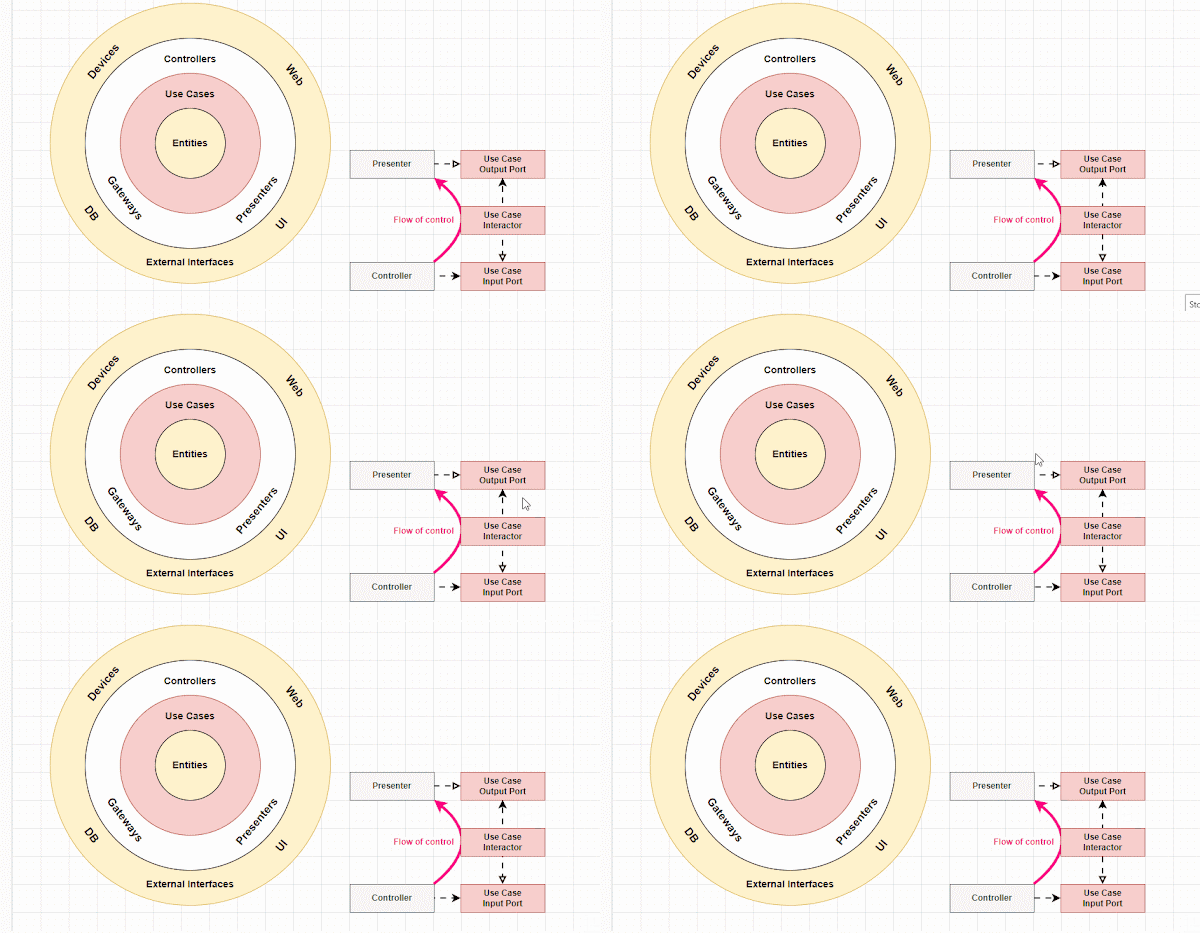
In software design, various architecture styles and patterns are used to solve common problems and improve the quality of software systems. There are several types of software architectures, each with its own principles and goals. Here we discuss Four popular architectural styles are Types of Important Architecture In Microservices: *️⃣Clean Architecture, *️⃣Onion Architecture *️⃣Hexagonal Architecture *️⃣Vertical Slice Architecture Clean Architecture: what is Clean Architecture: 💥Clean Architecture is a software design philosophy that emphasizes separation of concerns and maintainability. It was introduced by Robert C. Martin, also known as Uncle Bob. The key idea behind Clean Architecture is to create software that is independent of frameworks, UI, databases, and other external concerns, allowing it to be easily testable and adaptable to changing requirements. Core Principle: The core principle of Clean Architecture is the separat...

ValueObjects in DDD

In this example, Money is a Value Object representing an amount of money with a currency. Here's why it's a Value Object: public class Money : IEquatable { // Properties public decimal Amount { get; } public string Currency { get; } // Constructor public Money(decimal amount, string currency) { Amount = amount; Currency = currency; } // Equality check public bool Equals(Money other) { if (ReferenceEquals(null, other)) return false; if (ReferenceEquals(this, other)) return true; return Amount == other.Amount && Currency == other.Currency; } public override bool Equals(object obj) { return Equals(obj as Money); } public override int GetHashCode() { unchecked { return (Amount.GetHashCode() * 397) ^ Currency.GetHashCode(); } } } Immutable: The properties of Money are read-only, and there ar...

Microservices DDD Design Pattern

Image
Domain-Driven Design (DDD) is an approach to software development that focuses on understanding and modeling the domain of a problem to create a shared understanding between technical and non-technical stakeholders. DDD emphasizes collaboration and communication between domain experts and developers to build a rich and accurate model of the problem domain. Here are some key patterns in Domain-Driven Design: In Domain-Driven Design (DDD), entities and value objects are both core building blocks used to model domain concepts, but they serve different purposes and have different characteristics. Entity An Entity is a distinct, identifiable object that has a continuous existence. It is defined by its identity, which remains constant throughout its lifecycle. More Details Value Object A Value Object is an object that describes some characteristic or attribute but has no conceptual identity. They are immutable and can be shared.In C#, you can ...

Entity in DDD

Image
public class Patient { public int Id { get; private set; } public string Name { get; private set; } public DateTime DateOfBirth { get; private set; } public Address Address { get; private set; } public Patient(int id, string name, DateTime dateOfBirth, Address address) { Id = id; Name = name; DateOfBirth = dateOfBirth; Address = address; } } public class Address { public string Street { get; private set; } public string City { get; private set; } public string State { get; private set; } public string PostalCode { get; private set; } public Address(string street, string city, string state, string postalCode) { Street = street; City = city; State = state; PostalCode = postalCode; } } 🔸 In this example, Patient is an entity with a distinct identity (Id) and attributes that define it. . 🔸 Address is a value object that represents a...